
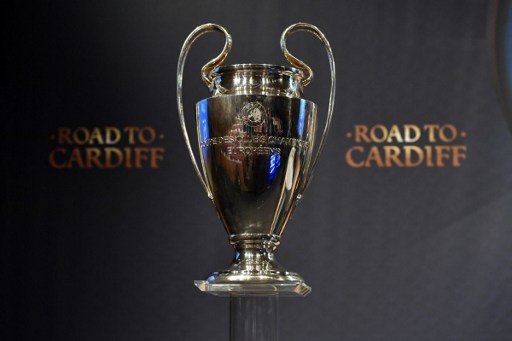
There are 32 clubs in the current Champions League group stage, divided into eight groups of four. 36 clubs will participate in the Champions League league phase, formerly known as the group stage, beginning with the 2024–2025 season. This will provide four more teams the opportunity to compete against Europe’s best clubs.
All 36 of these clubs will compete in a single league competition, with their rankings combined.
Previously known as the group stage, teams will now play eight games in the league phase.
Instead of facing three opponents twice, they will now play eight different teams, half of which will be at home and the other half away.
The teams will be ranked into four seeding pots before being divided into eight opponents. Each team will be pitted against two opponents from each of these pots, with one team from each pot playing at home and one away from their stadium.
How will the four additional group stage slots for the Champions League be distributed?
The standings of each association in the association club coefficient ranking and a club’s final standing in the domestic league competition of the previous season will determine each club’s eligibility for the Champions League, which will remain open.
For the following season, the access list will remain in its current format, with the distribution of four more slots for the 2024–2025 season as follows:
Slot 1: The club that finishes third in the association championship and fifth on the access list—as defined by the UEFA Association club coefficient ranking—will be awarded this spot.
Slot two: A domestic champion will be granted this spot by increasing the number of clubs who qualify through the Champions path of the competition’s four qualifying rounds, from four to five.
Slots three and four will go to the associations whose clubs had the best overall season performance last year (i.e., the association club coefficient of the previous season, which is based on the total number of club coefficient points each association’s clubs received divided by the number of clubs from that association that participated). The club that is ranked second-best in its home league, behind those who have already qualified directly for the league phase, will receive one automatic spot in the league phase (also known as the “European Performance Spot”) for each of those two organizations.
How will clubs advance to the Champions League knockout stage, and will the knockout phase’s format alter?
The league’s ultimate position will be decided by the results of each match, with three points awarded for a win and one point for a draw.
Teams that finish between 9 and 24 will compete in a two-leg knockout phase play-off to earn a spot in the competition’s final 16. Teams that finish in the top eight will advance directly to the round of 16. Teams will be eliminated without having the opportunity to compete in the UEFA Europa League if they place 25th or lower.
The stakes for each team will rise under the revised format, which places them all in one league and ranks them until the last night of the league phase.
The teams who placed ninth through sixteenth will be seeded in the knockout phase play-off draw, which means they will play a team ranked seventeenth through twenty-fourth, with the return leg likely to take place at home.
The top eight finishers, who will be seeded in the round of 16, will square off against the eight clubs that win the knockout phase playoffs. These clubs will then advance to the round of 16.
The league phase rankings will also influence the knockout phase pairings, and a draw will decide and map out the path for clubs to advance to the championship game.
The competition will proceed with its current structure, which consists of knockout stages leading to a final held at a neutral location chosen by UEFA, starting with the round of 16.
The final will still take place on a Saturday, but all of the games leading up to it will still take place in the middle of the week, acknowledging the significance of the domestic schedule of competitions around Europe.
Will the forms of the Europa League and Europa Conference League also alter in 2024–2025?
Modifications will also be made to the UEFA Europa League, which consists of eight league phase matches against eight different opponents, and the UEFA Europa Conference League, which will become the UEFA Conference League beginning in 2024-2025 and consist of six league phase matches against six different opponents. In the league stage of both competitions, 36 clubs will compete
How will the three tournaments’ revised schedule appear on the calendar?
The Europa League matches are slated to take place from September to December, while the Champions League and Europa League fixtures are scheduled from September to January. There will be a single match in each UEFA club competition; there won’t be any matches in the other two competitions during that period.
Tuesdays and Wednesdays are Champions League games during a typical week, and Thursdays are Europa League and Europa Conference League games.
There are three match days scheduled for the Champions League exclusivity week: Tuesday, Wednesday, and Thursday.
The fixtures for the Europa League exclusivity week are on Wednesday and Thursday. Matches for the Europa Conference League week will take place on Thursday.
Matches are scheduled for Thursday of the Europa Conference League week.
All matches will take place at the same time on the last matchday of each league phase.