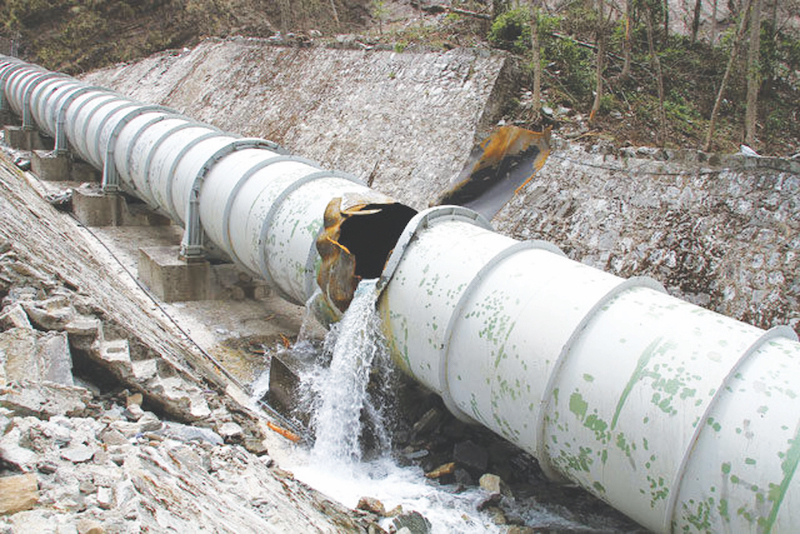
Speaking about the need to increase production and the divestment of foreign oil companies, Lokpobiri emphasized that Nigeria also needed to fix its aging, corroded, and expired pipelines.
He pointed out that the issue is how to transport the crude oil to the terminal, even if the nation is capable of producing over 1.7 million barrels.
Our issue stems in part from the fact that the pipelines that were used to carry our oil were constructed in the 1960s and 1970s and have since reached the end of their useful lives. We’ve found that evacuation remains a major issue, even in cases where production is feasible.
The reason pipeline vandalism is so simple is because the pipelines have all completely corroded and expired. This means that anyone can simply go to a pipeline and tap it, breaking the pipe; however, there are more expensive, better technologies available, as well as more expensive, better pipelines that are being used in other nations. We also need to adjust our model.
“Are the funds available for NNPC, our joint venture partner, to replace these pipelines? If NNPC has the funds to be able to achieve that—which I don’t think they have—I think they will speak for themselves, said Lokpobiri.
In order to fix the outdated pipes, he consequently advocated for public-private partnerships, saying, “That is why we have to go for the global model – PPP.” The commercial sector needs to get involved.
He noted that in order for the private sector to enter a country and make investments, it must have faith in that nation. He emphasized that this confidence was lacking during the previous 12 years, during which time there was no foreign investment in the country’s oil firm.
“We attempted to restore confidence when this government took office, and investors are showing up,” Lokpobiri continued.
According to the oil minister, NNPC imports and sells fuel below the landing cost, which is why it is being smuggled out of Nigeria and into neighboring nations.
An important factor in ensuring Africa’s energy security is Nigeria. For this reason, any PMS that we bring into Nigeria ends up throughout all of West Africa. For this reason, smuggling will never end. There is no way that smuggling can end if NNPC imports PMS and sells it to marketers for maybe N600 or less, the company claims, adding that security personnel stationed at crossings are also implicated.
“You and I know the answer: even if you put all the police officers on the road, the smugglers who are carrying the stuff outside the country are Nigerians. Since all of the customs officers are Nigerians, you and I are aware of the issue, which is why I’m stating that in order for Africa to obtain electricity, you should put them all on the road.
Nigeria must play a very strategic role in security,” he said.
Nigeria’s Minister of Petroleum, Lokpobiri, expressed concerns about the supply of crude to local refineries, stating that unless production is ramped up, the supply may suffer. He emphasized the importance of supporting local refining and seeking investors to explore and ring out crude to meet domestic obligations and export some to raise more money. He also pledged to ensure healthy competition by being fair to both small and large refiners, ensuring that the country’s crude supply remains sufficient.