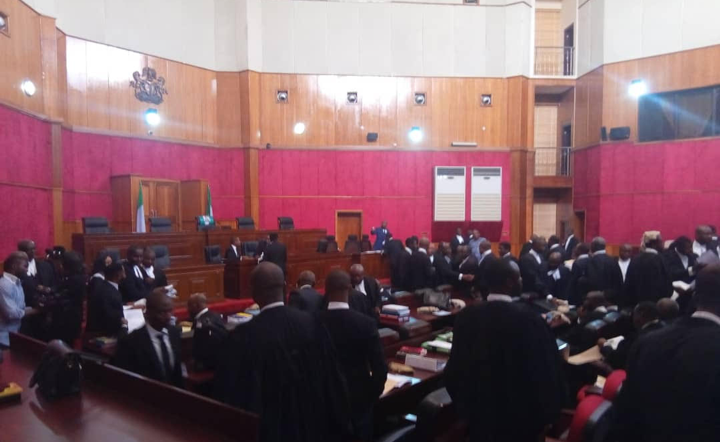
This allocation, categorized under Service-Wide Votes, reflects a significant financial commitment to managing electoral disputes and related obligations arising from Nigeria’s elections. Service-Wide Votes serve as a contingency fund for the government to address expenditures not tied to specific ministries and accommodate unforeseen requirements.
This allocation is emphasized within the broader context of the Consolidated Revenue Fund (CRF), with the N135.22 billion accounting for approximately 3.65 percent of total CRF charges, which stand at N3.70 trillion. Alongside this, a much larger statutory transfer of N1.01 trillion is proposed for the Independent National Electoral Commission (INEC) in the 2026 fiscal budget, which is critical as INEC receives 21 percent of the total statutory transfers of N4.80 trillion, ensuring financial autonomy for its mandated functions.
INEC previously indicated a need for N873.78 billion for the 2027 general elections, which is a substantial increase from the N313.4 billion allocated for the 2023 elections. The N135.22 billion allocation represents a new line item that was not part of the initial budget proposal, leading to scrutiny from opposition parties and civil society organizations. Critics, including representatives from the People’s Democratic Party (PDP) and the African Democratic Congress (ADC), have questioned the transparency and justification behind this funding, arguing that it suggests a lack of confidence in conducting credible elections and anticipates legal disputes.
Concerns highlighted by party officials indicate that such a large financial provision raises accountability issues and insinuates that INEC may not be well-prepared to manage a transparent electoral process. Prominent figures including political economist Prof. Pat Utomi and human rights lawyer Femi Falana have criticized the rationale behind the Federal Government financing these legal provisions, contending that electoral costs should fall under individual candidates’ responsibilities and that INEC should independently manage its own budget. Falana especially noted that INEC’s legal expenditures in previous elections were relatively modest, suggesting that the anticipated scale of legal challenges may not warrant such extensive budgetary provisions.