However, despite the distance between the two sides, three rounds of peace negotiations between Russia and Ukraine in Istanbul have failed to advance a ceasefire. Russia has advanced its ground advance and increased drone and missile assaults against its pro-Western neighbor to a historic level.
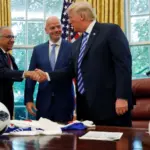
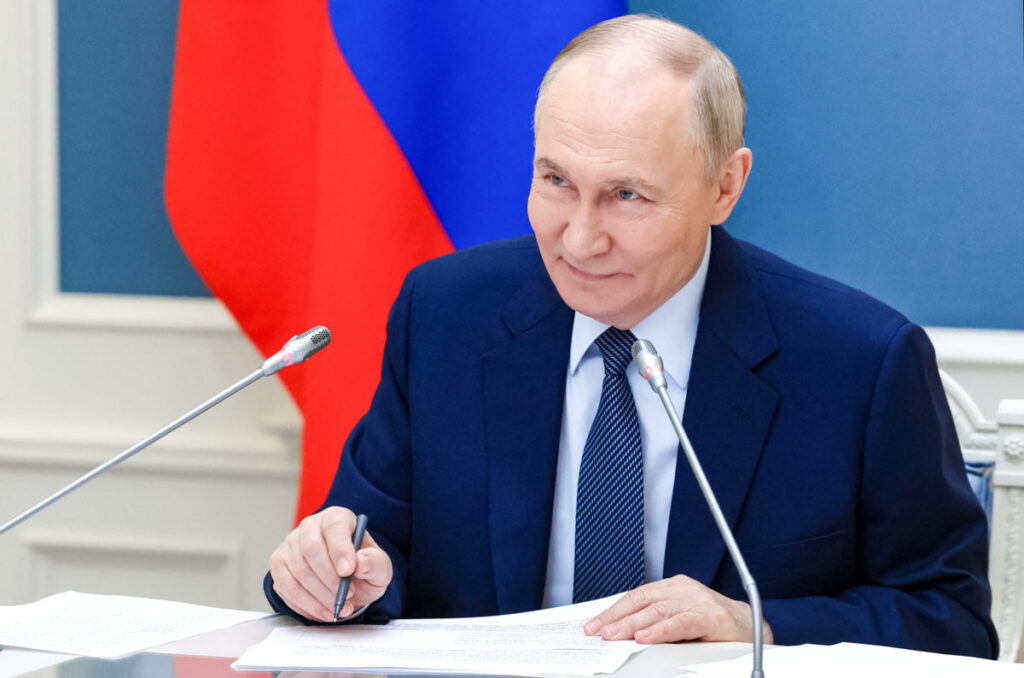
A video of Putin and Witkoff shaking hands in the Kremlin prior to the meetings was released by the Kremlin. However, it gave no other information.
Ukrainian President Volodymyr Zelensky called on Washington to increase pressure on Moscow to accept a ceasefire ahead of the conference.
The prospect of sanctions
Trump has previously threatened to put “secondary tariffs” on Russia’s major trading partners, including China and India, but the White House has not specified the precise measures it will use against Russia.
The goal of the action would be to restrict Russian exports, but there would be a serious risk of global disruption.
Trump stated on Tuesday that he would not order any economic punishment until after the conclusion of the negotiations in Moscow.
He told reporters, “We’re going to see what happens.” “We’ll decide on that at that point.”
The Kremlin denounced Tuesday’s “threats” to increase tariffs on Russia’s trading partners as “illegitimate,” without specifically mentioning Trump.
Tens of thousands of people have died as a result of Russia’s more than three-year war in Ukraine.
devastated large portions of the nation and displaced millions of people.
If Ukraine wants the conflict to end, Moscow has insisted that it give up Western assistance and give up more land.
Zelensky urged his friends to advocate for “regime change” in Moscow last week, while Kyiv is demanding an immediate ceasefire.
Strengthening all of the tools that the US, Europe, and the G7 have at their disposal is crucial in order to ensure that a ceasefire actually takes effect right away. Following Witkoff’s arrival in the Russian capital on Wednesday, Zelensky posted on social media, saying, “Ukraine sees the political will, appreciates the efforts of our partners, of America, and of everyone who is helping.”
The use of nuclear rhetoric
In recent weeks, Trump has become more and more furious with Putin over Russia’s relentless offensive.
According to data analyzed by AFP from Kyiv’s air force, Russia launched a record number of long-range drones at Ukraine in July.
Additionally, its forces have stepped up their ground assault and advanced into areas of Ukraine that Russia has not asserted it has seized.
Ukrainian officials reported Wednesday at least two people were killed and 10 others wounded in Russian night shelling of a holiday camp in the southern Zaporizhzhia region.Ukrainian officials reported Wednesday at least two people were killed and 10 others wounded in Russian night shelling of a holiday camp in the southern Zaporizhzhia region. When reporters asked Trump on Monday what Witkoff’s message would be to Moscow, and if there was anything Russia could do to avoid sanctions, Trump replied: “Yeah, get a deal where people stop getting killed.” Kremlin spokesman Dmitry Peskov said Monday it considered the talks with Witkoff to be “important, substantial and helpful” and valued US efforts to end the conflict. The visit comes with tensions running high between Moscow and Washington.
Trump said he had deployed two nuclear submarines following an online row with former Russian president Dmitry Medvedev were now “in the region.” Trump has not said whether he meant nuclear-powered or nuclear-armed submarines. He also did not elaborate on the exact deployment locations, which are kept secret by the US military. Russia, in its first comments on the deployment, urged “caution” Monday. Moscow then said it was ending a self-imposed moratorium on nuclear-capable intermediate-range missiles, suggesting it could deploy such weapons in response to what it alleged were similar US deployments within striking distance of Russia.