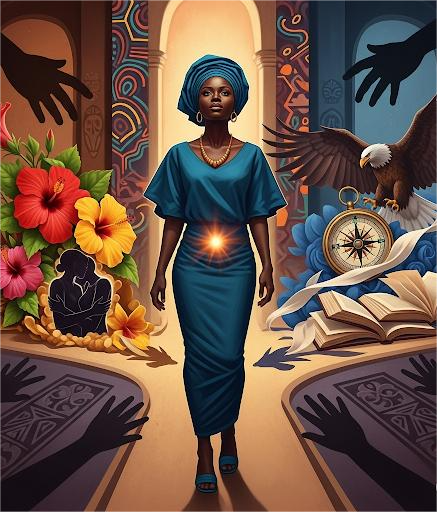
In a world driven by logic, metrics, and measurable outcomes, the desire to become a mother often defies tidy explanation. It’s not purely economic, certainly not always convenient, and rarely predictable. Yet, despite rising costs, bodily demands, sleepless nights, and global uncertainty, women across cultures still dream of motherhood. This longing isn’t always rational, but it is deeply human. It springs not just from biology but from an ache to nurture, to build legacy, and to witness the miracle of continuity. Logic can define what is efficient, but motherhood is often about what is essential.
To become a mother is to agree to vulnerability. It is to accept a lifelong contract signed in uncertainty: of love, of heartbreak, of sacrifice, and of hope. Is it logical to want a child when maternal mortality still stalks African hospitals? When the price of formula rivals rent? When the world is burning and inequality yawns? These are valid questions and they echo louder in the minds of women who must weigh dreams against data. But logic alone cannot measure the transformative power of raising a soul. Nor can it explain the warmth of a child’s first laugh or the strength women discover in themselves through mothering.
More and more, this generation of women is choosing to remain childless, not out of selfishness, but from deep reflection and autonomy. Yet many of them are facing online ridicule and societal backlash, particularly from men who do not fully grasp what it takes to become a mother. If only they knew. If only they understood the physical, emotional, mental, and spiritual weight that motherhood demands. It is not a duty to be forced, but a calling that must come naturally to a woman. When it doesn’t, the child suffers. And in a country like Nigeria, where millions of children are born into poverty with little access to education or care, the decision not to mother could also be an act of responsibility.
Still, not every woman wants this path. And that, too, is logical and valid. The freedom not to mother is just as sacred as the desire to do so. In cultures where womanhood is still narrowly equated with fertility, this topic becomes even more complex. Some choose not to birth children and instead birth ideas, businesses, or communities. Others mother through mentorship or activism. The logic here is not in biology, but in purpose. And perhaps the deeper question isn’t whether becoming a mother is logical, but whether society makes space for all forms of womanhood, mother or not.
So, is it logical to want to become a mother? Maybe not always. But it is deeply personal, quietly powerful, and beautifully irrational in the way that all things rooted in love tend to be. And at the same time, choosing not to mother can also be an expression of love, love for one’s peace, the environment, or a society already stretched thin. With Nigeria’s ballooning population and limited resources, giving birth should never be treated as a societal expectation but as a conscious decision. In a world obsessed with efficiency, motherhood and the freedom not to mother remind us of the value of process, patience, and presence. And maybe that’s the logic we’ve been missing all along.