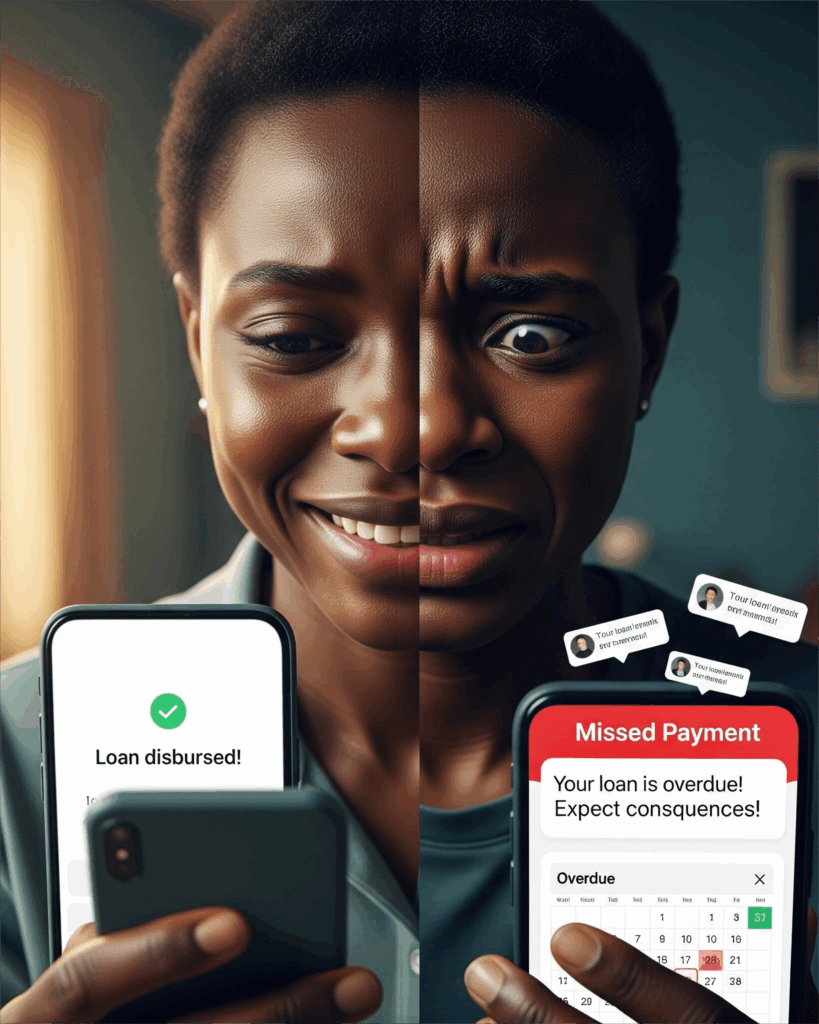
Fatima runs a small bukka on the outskirts of Ilorin. Every morning, she wakes before sunrise to cook, hoping to sell enough plates of rice and stew to restock by evening. One rainy season, sales dropped, and she couldn’t afford to buy tomatoes in bulk. She turned to a loan app ₦15,000 to get her through the week. It felt like a miracle: no paperwork, no collateral, money in her account within minutes. But two weeks later, she owed ₦21,000, and reminders from the app became threats. Her name was broadcast to her phone contacts. The loan helped, but it also humiliated her. Fatima’s story isn’t rare, it’s the new Nigerian reality. Credit is easier to get than ever, but whether it lifts you or traps you depends on far more than access.
Across Nigeria, borrowing has become a lifeline. From underpaid teachers to struggling entrepreneurs, many lean on digital lenders and thrift cooperatives to survive. When salaries delay, loans pay school fees. When a child falls sick, a quick loan fills the gap. This ease is a relief in a country where banks ask for collateral most people don’t have. But access without education is a loaded gun. Many don’t fully grasp how interest works, or how multiple small loans pile into a mountain of debt. And when repayments stall, the shame begins, calls at odd hours, warnings to family members, and in extreme cases, public disgrace. What was supposed to be a bridge becomes a wall.
The deeper problem is that the system isn’t built with empathy. Most loan apps operate without compassion, regulation, or mercy. They treat human beings like data points, not lives in motion. The woman who borrowed to save her child shouldn’t be dragged online because she missed a payment. The man who took a loan to fix his keke napep shouldn’t be harassed by agents who don’t know his story. Even traditional lending methods, like ajo and esusu, are beginning to falter under pressure from scams and mismanagement. People are losing trust and with it, their safety nets.
But it’s not all darkness. When credit is used well, it changes lives. Young tailors have expanded their shops, okada riders have bought new bikes, students have written final exams, because someone trusted them with just enough. What’s missing is structure, fairness, and dignity. We need better laws, smarter systems, and more education, not just about how to borrow, but when not to. Financial literacy must meet people where they are: in markets, churches, bus stops, and radio shows, in Pidgin, Yoruba, Hausa, Igbo, and beyond. When people understand money, they make better choices, not just for survival, but for growth.
At its best, credit is a partner. At its worst, it becomes a predator. Nigeria stands at a crossroad, between empowering people and exploiting them. If we want a country where hustle truly pays, then access to money must come with access to knowledge, fairness, and respect. The dream shouldn’t be just to borrow fast. The dream should be to borrow well, repay with ease, and build a life that doesn’t have to start over with every small crisis. That’s when credit becomes a true gift, not a trap.