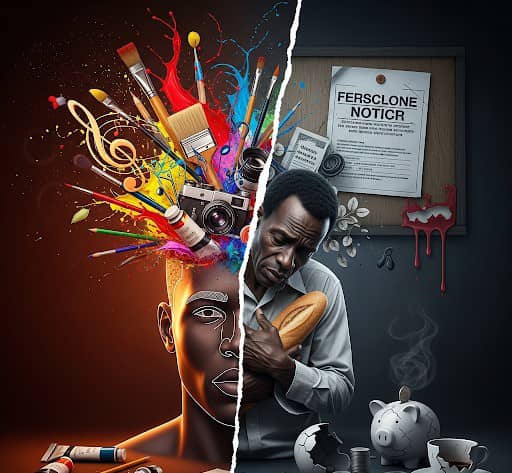
In the heart of Nigeria’s bustling creative industry, a silent war rages, a tug of war between pure artistry and the irresistible lure of commercial success. For many creatives, particularly in music, film, fashion, and visual arts, the desire to stay true to their unique voice is often tested by the market’s relentless hunger for what’s trending. An indie filmmaker dreams of telling gritty, nuanced stories about life in Ajegunle, but funding only flows when the script fits the box-office template: slapstick comedies, romance, or crime thrillers.
A spoken word poet spills truth about depression and identity, yet event organizers insist on “uplifting” content only. This clash isn’t just about taste; it’s about survival. In a country where artistic grants are rare and the audience is often financially fatigued, many must choose between their voice and their rent.
The Nigerian market, though vast and vibrant, is largely driven by what sells fast, not what lingers in the heart. This has created a culture where metrics matter more than message, streaming numbers, Instagram followers, and viral dance trends often determine who gets booked, funded, or even noticed. Talented artists are forced to compromise, morphing their work to appeal to algorithm gods and fleeting attention spans. The result is a creative scene saturated with similar sounds and recycled scripts, while fresh voices, especially those pushing cultural boundaries or speaking difficult truths remain unheard. For every Tems who rose on her own terms, there are dozens more who burned out or bowed out because their art couldn’t pay the bills.
This struggle is made even more bitter by the double-edged sword of fame. Once an artist cracks into mainstream recognition, the pressure doesn’t ease, it multiplies. With visibility comes expectation. Audiences now expect the same vibe, the same genre, the same persona, no room for reinvention or evolution.
Record labels, marketers, and even fans begin to dictate direction, subtly or loudly. Any deviation is seen as a risk, and any failure as confirmation that “the old you was better.” Creatives become brands, and brands are rarely allowed to be messy, raw, or vulnerable. The price of fame in Nigeria is steep: you gain the world’s eyes but may lose your artistic soul in the process.
Ironically, the same country that celebrates icons like Fela Anikulapo-Kuti, a rebel, innovator, and cultural commentator has made it increasingly hard for young creatives to follow such paths. Today, the industry often asks that you pick a lane: commercial or conscious, viral or valuable, entertaining or enlightening. Few can afford to straddle both. But it is in this tension that some of the most important and transformative Nigerian art has emerged. Artists who insist on creating from truth despite being overlooked or underpaid are laying the foundation for long-term legacy, even if fame or fortune never follows immediately.
Ultimately, the conversation isn’t about rejecting commercial success but about redefining it. True success should not just be measured in naira or clicks but in impact, in integrity, in how boldly one holds space for authenticity. Nigeria’s creative future depends on supporting spaces where artists can evolve freely, fail publicly, and still be respected. Until then, the struggle continues between the art that wants to be made and the market that demands to be pleased. It is in that space of conflict, however, that real, lasting brilliance is born.