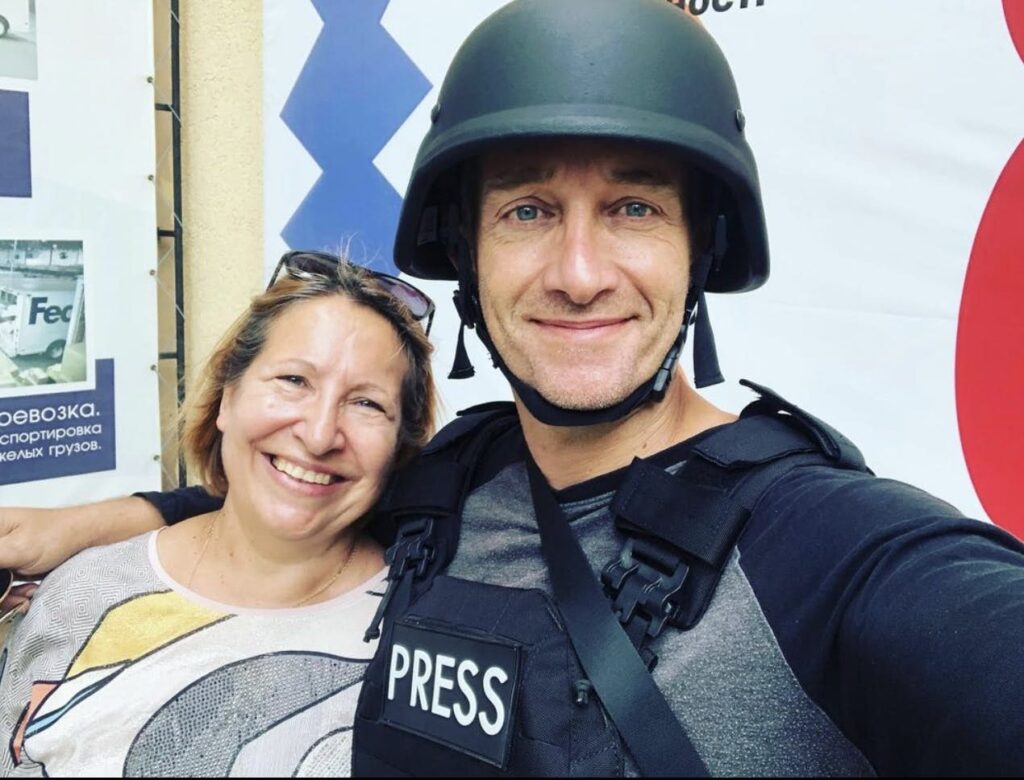
In a fiery live segment published today, freelance journalist Ian Lloyd Neubauer accused Al Jazeera of functioning not merely as a broadcaster but as a “mouthpiece” for Hamas, a claim that goes beyond standard media bias and enters the realm of political allegiance.
On the segment Neubauer sharply criticizes Al Jazeera’s editorial stance, alleging that its coverage effectively amplifies Hamas messaging rather than serving as a platform for balanced journalism.
The Core Allegation
Neubauer contends that Al Jazeera has crossed the line from independent reporting into propaganda, directly aligning with Hamas’s narratives. His bold characterization echoes longstanding accusations made by Israeli authorities and other critics, who argue the network routinely offers unfiltered access to Hamas statements while marginalizing dissenting voices.
Historical Context & Previous Controversies
Al Jazeera has faced criticism for years—not just internationally, but from neighboring Arab states and political factions (like Fatah), each accusing the network of editorial bias in favor of Hamas.
Notably:
-
Israel formally shut down Al Jazeera in May 2024, citing national security concerns and labeling the broadcaster as an intelligence and propaganda arm of Hamas after reviewing evidence in mid‑2024.
-
The Palestinian Authority later suspended Al Jazeera broadcasts in the West Bank, citing concerns over incitement and biased storytelling.
Why It Matters
This new, pointed remark by Neubauer adds both fuel and urgency to the debate over media integrity and political influence in wartime coverage. As global audiences increasingly scrutinize narratives coming out of conflict zones, the lines between journalism, state influence, and armed-actor messaging become ever blurrier.
If Neubauer’s claims are taken seriously, they raise a profound question: Can a news outlet genuinely maintain credibility when its editorial posture appears to echo the very organization it should examine?
Final Takeaway
Neubauer’s allegation is not an isolated critique—it’s part of a broader discourse challenging Al Jazeera’s journalistic independence. Whether you view the network as a platform amplifying suppressed voices or as a tool advancing geopolitical messaging, this confrontation makes one thing clear: the credibility of media matters deeply, especially when the stakes are the truth behind conflict.