
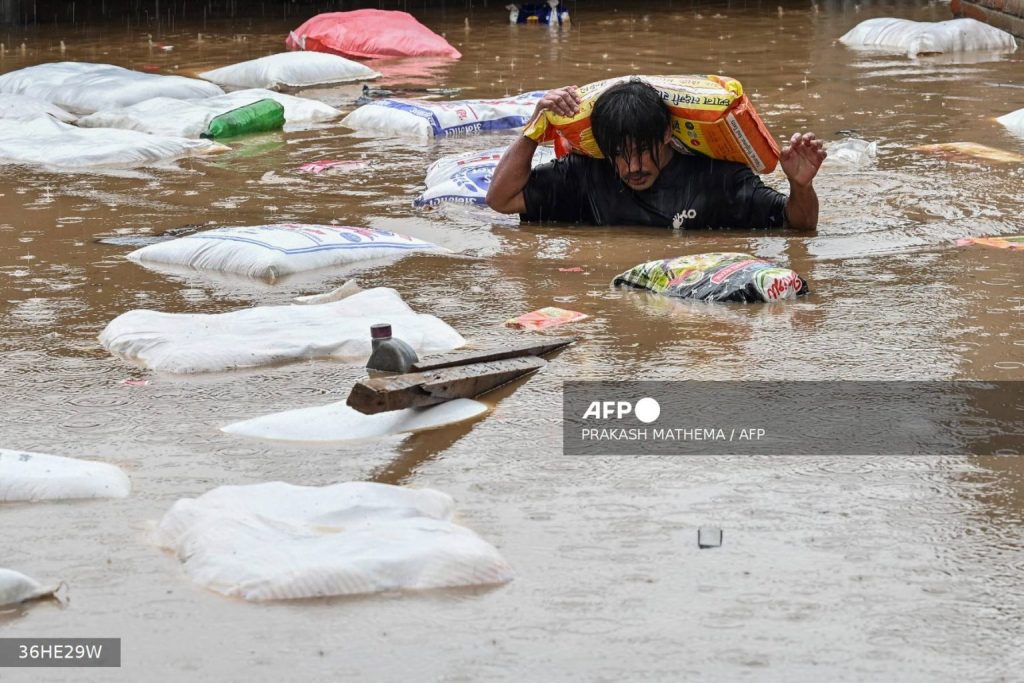
As the waters from the monsoon floods that killed at least 192 people throughout the Himalayan nation receded, search and rescue workers in the capital of Nepal began going through the destroyed homes on Monday. Experts claim that although deadly floods and landslides are frequent during South Asia’s monsoon season, which runs from June to September, they are becoming more frequent due to climate change.
After the most intense rains in over 20 years, entire neighborhoods in Kathmandu were submerged, and landslides blocked roadways, momentarily cutting off the capital from the rest of Nepal. “We are concentrating on searching and saving lives, including those who have become lost on roads,” Home Ministry spokesperson Rishi Ram Tiwari informed AFP. “An additional 31 individuals are reported missing, and 192 confirmed deaths,” he stated.
According to Nepal Police spokesman Dan Bahadur Karki, at least 35 of the dead were buried alive as debris from a landslide crashed into cars on a highway south of Kathmandu. In the meantime, rescuers wearing rubber boots up to their knees were clearing muck with shovels from the worst-affected riverbank neighborhoods in and around Kathmandu, many of which were unofficial slum communities.
Unplanned urban sprawl surrounding the Bagmati River, which flows through the city, has exacerbated the calamity, according to the International Centre for Integrated Mountain Development, a think tank with headquarters in Nepal.
The Nepalese army reported that over 4,000 people had been saved, with rafts, motorboats, and helicopters being utilized to evacuate stranded houses.
Nearly two dozen key highway sections going into Kathmandu were being cleared of debris using bulldozers.
• “Everything is stuck”
Vendors in Kathmandu said that the capital’s supply of fresh produce has been significantly reduced due to damage to intercity highways.
“All of it is stuck because the highways are blocked, even though the farmers have their produce ready,” Binay Shrestha, a worker at one of the city’s major produce markets, told AFP. According to preliminary data from stations in 14 districts, Nepal’s weather bureau reported record-breaking rain in the 24 hours leading up to Saturday morning. The most rain since 2002 was reported at a monitoring station at the airport in Kathmandu, with approximately 240 millimeters (9.4 inches) falling.
In an area with a population of almost two billion, the summer monsoon, which lasts from July to September, provides 70–80% of South Asia’s yearly rainfall and is essential to agricultural and food production. However, monsoon rains also cause landslides and floods, which cause extensive mortality and destruction.
Climate change, according to experts, has made them more frequent and intense. This year, rain-related calamities in Nepal have claimed the lives of over 300 individuals.
AFP.