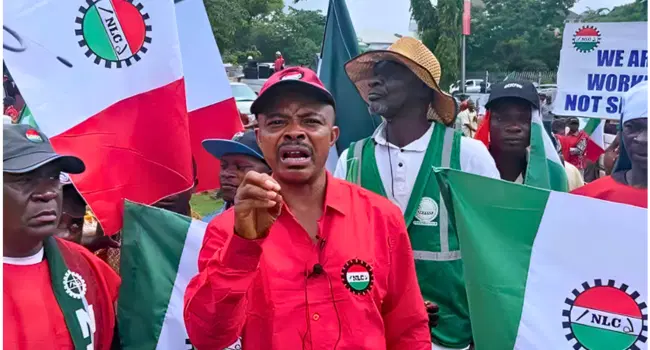
The Nigeria Labour Congress (NLC) and civil servants represented by the Joint National Public Service Negotiating Council (JNPSNC), Trade Union Side, have made urgent demands to the Nigerian government for a new minimum wage of N500,000 and a reduction of petrol prices to N500 per litre to alleviate the growing economic hardship faced by workers and their families. This demand was communicated in a letter addressed to President Bola Tinubu by JNPSNC National Secretary, Olowoyo Gbenga, who also called for the establishment of a committee to negotiate a new national minimum wage in anticipation of January 2027.
The NLC described these demands as both realistic and legitimate, correlating them with the recent spike in fuel prices, which have risen to over N1,430 per litre, exacerbating the cost-of-living crisis. They have set a deadline of September 30, 2026, for the government to act, warning that failure to respond is generating significant tension among the workforce and the broader Nigerian populace.
The JNPSNC comprises various unions, including the Nigerian Civil Service Union, and has stated that the removal of fuel subsidies three years ago has led to spiraling fuel costs, impacting essential commodity prices throughout the economy. The Council criticized the government’s provision of food palliatives, arguing they serve as temporary measures that merely mask the deeper issues of poverty and economic instability rather than offering sustainable support.
In support of shared grievances, the workers emphasized that affordable fuel pricing is essential for economic recovery and proposed the creation of an intervention fund specifically for stakeholders in the oil sector to help stabilize fuel prices. This initiative is expected to benefit all Nigerians by making fuel accessible at a lower price.
Additionally, the Council reiterated the necessity for the government to stabilize fuel prices, citing that rising costs significantly affect the working class. They also noted that Nigerian workers deserve protection and support, especially in the face of soaring prices, which are primarily driven by factors like local refining capacity and the need for enhanced storage facilities.
On wage adjustments, the JNPSNC advocated for an immediate wage award encompassing all levels of government, recommending a uniform minimum salary for public servants that aligns with the anticipated 2027 salary structure. They called upon the National Salaries, Incomes and Wages Commission (NSIWC) to engage in discussions with the NLC, the Trade Union Congress of Nigeria, and other stakeholders regarding these salary reforms.
The NLC has publicly backing the civil servants’ demands, with Acting General Secretary Benson Upah affirming the legitimacy of the calls for both a wage award and reduced fuel prices, underscoring that stagnant wages amidst rising inflation render many workers unable to afford basic needs. They emphasized that the repercussions of high fuel prices extend beyond just workers, affecting the entire Nigerian population, particularly the economically vulnerable. The pressing economic demand highlights an urgent need for substantial government intervention, which is deemed financially feasible given the country’s resources.