1. Demographics
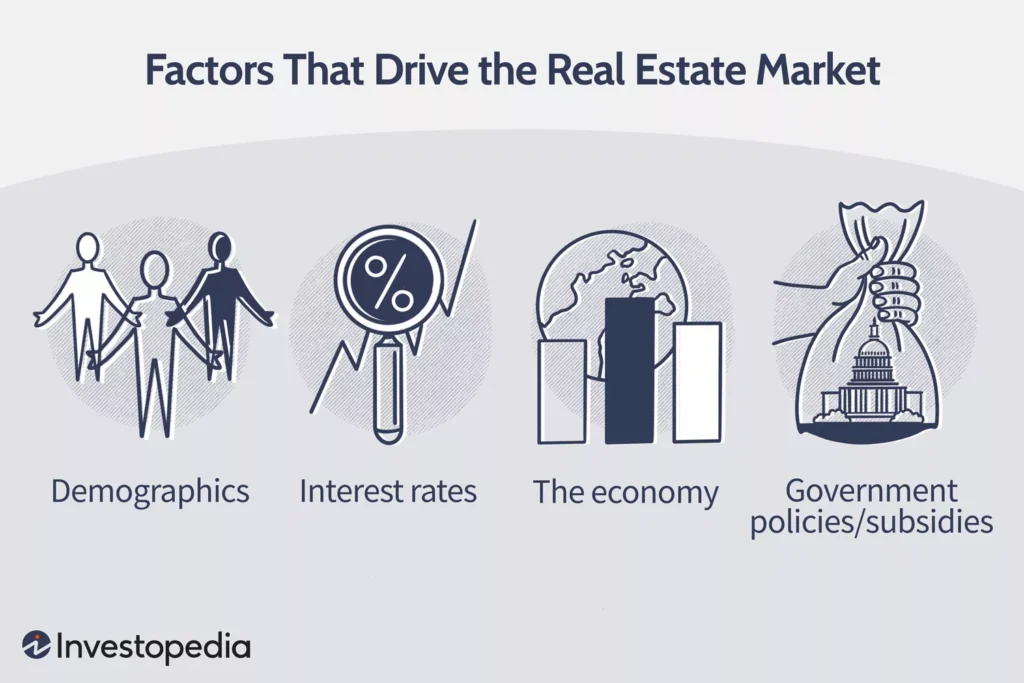
Population growth, migration patterns, and demographic shifts are crucial factors in influencing real estate trends. The baby boomers born between 1945 and 1964, who began their retirement in 2010, represent a demographic trend that could significantly impact the real estate market. The retirement of these individuals, which began in 2010, is expected to be felt for years to come. Investors should consider the impact of this demographic shift on demand for second homes in popular vacation areas and the demand for larger homes as smaller incomes and family sizes decrease. Understanding these factors can help investors narrow down the type and location of potential real estate investments before demographic trends begin.
2. Interest Rates
Interest rates play a major impact on the real estate market, affecting prices significantly. Lower interest rates lower mortgage costs, allowing borrowers to purchase residential properties. However, this can also increase demand for real estate, pushing prices up. Conversely, higher interest rates increase mortgage costs, lowering demand and real estate prices. The relationship between interest rates and investments like real estate investment trusts (REITs) is similar to a bond’s relationship with interest rates. When interest rates decrease, bond prices increase due to a more desirable coupon rate, while when rates increase, bond prices decrease. Conversely, when interest rates increase, REITs’ high yields become more attractive, pushing their prices down.
3. The Economy
Real estate values are influenced by the overall health of the economy, which is measured by indicators like GDP, employment data, manufacturing activity, and goods prices. A sluggish economy can impact the real estate market, but the cyclicality of the economy can have varying effects on different types of real estate. For instance, a REIT with a larger percentage of hotels as investments is more affected by an economic downturn than one with office buildings. Hotels are sensitive to economic activity due to their short-term lease structure, while office tenants have longer-term leases that cannot be changed during an economic downturn. It is crucial to understand the cycle of the economy and a real estate property’s sensitivity to each economic cycle.
4. Government Policies and Subsidies
The U.S. government’s tax incentives can have a sizable impact on property demand and prices. In 2009, the government introduced a first-time homebuyer’s tax credit to stimulate home sales in a sluggish economy. 2.3 million people took advantage of the tax incentive, indicating that government incentives can temporarily boost property demand. However, without knowledge of these incentives, investors might have mistakenly assumed that housing demand was increasing due to other factors.
#naijastreetmatters