Oil prices saw a significant decline while stock markets experienced a sharp increase following the announcement of a deal between the United States and Iran to end their conflict, effectively reopening the critical Strait of Hormuz. This announcement, confirmed by mediator Pakistan, is slated to culminate in a signing ceremony in Switzerland on June 19. The closure of this maritime chokepoint had previously raised fears of inflation due to the surge in energy prices since the onset of hostilities, which sparked worries of further economic turmoil.
US President Donald Trump, who disclosed the agreement via social media on his 80th birthday, declared the authorization for the toll-free passage through the Strait of Hormuz. This development was welcomed by Iran’s Deputy Foreign Minister Kazem Gharibabadi, who indicated that the agreement would lead to an “immediate end” to the war, with further discussions expected on a final pact within two months. Despite the relief in the markets, the specific terms of the deal remain unclear, signaling possible future uncertainties.
In response to the news, crude oil prices plummeted by as much as 5%, with West Texas Intermediate nearing $83.30, a notable decline from over $110 at the start of the conflict. This drop in oil prices eased concerns regarding inflation, which had surged in May due to a significant rise in consumer prices and strong job creation in the United States. Analysts, including Stephen Innes from SPI Asset Management, noted that lower oil prices reduce inflationary pressures, alleviating the likelihood of rate hikes by central banks.
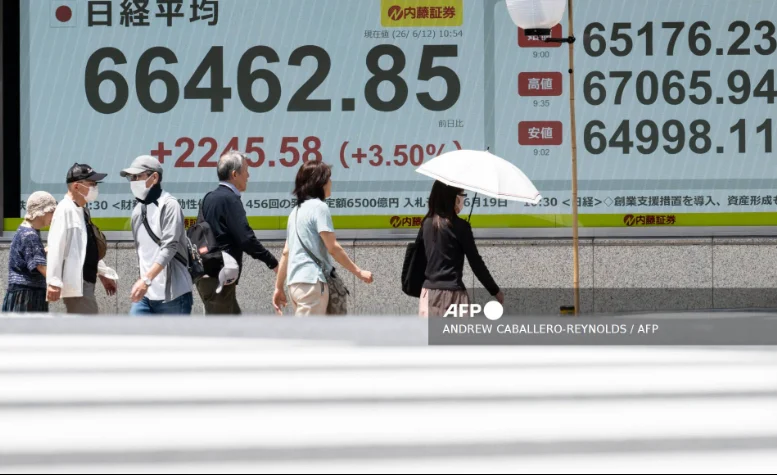
The positive market response included substantial gains in Asian equities, with Tokyo and Seoul indices rising around 5%, driven by a surge into tech companies following SpaceX’s record-breaking IPO. Other major markets, such as Shanghai, Sydney, and Taipei, reported increases, with Jakarta’s index jumping more than 4%, bolstered by a recovery of the Indonesian rupiah.
Market analysts expressed a cautious optimism regarding the deal’s potential long-term viability, emphasizing that its success would hinge on the specific details of the negotiated terms. Market participants are now focusing on the next moves, including the official signing in Switzerland and necessary compliance measures such as mine clearance in the region, as future uncertainties linger around the stability of global markets following the significant geopolitical development. Key figures around 0730 GMT reflect this market movement, with various indices across the globe showing upward trends in response to anticipated economic recovery.