This was announced following a meeting in Abuja with local crude oil refiners and oil marketers. During the discussion, topics covered included the price of refined products, competition, and the importation of Nigerian-made goods.
During the conference, local refineries were manufacturing some refined products, but it didn’t stop marketers from purchasing products from indigenous producers and going through other sources.
In response to allegations of the importation of dirty fuel into Nigeria, the government, through the Nigerian Midstream and Downstream Petroleum Regulatory Authority, said that refined petroleum products with high sulfur contents were last imported in February and that the regulator had since taken care of the matter.
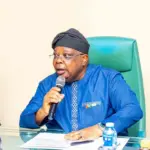
This was revealed to journalists by Ogbugo Ukoha, Executive Director of Distribution Systems, Storage and Retailing Infrastructure at NMDPRA, following the regulator’s meeting with local crude oil refiners and oil marketers, which included representatives from the Dangote refinery and modular refineries.
Responding to a senior Dangote refinery official’s accusations against the NMDPRA, Ukoha said, “There is no dirty fuel that is being brought into Nigeria.”
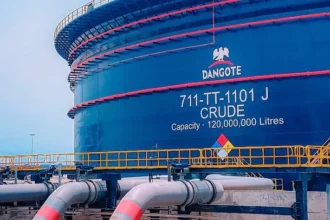
According to a report on Monday, Devakumar Edwin, the Vice President of Oil and Gas of Dangote Industries Limited, accused the Nigerian Midstream and Downstream Petroleum Regulatory Authority of arbitrarily awarding licenses to marketers to bring in unclean refined goods.
He had claimed that “licences are being issued, in large quantities, to traders who are buying the extremely high sulphur diesel from Russia and dumping it in the Nigerian market,” despite the fact that Dangote was producing and bringing diesel into the market in accordance with the rules of the Economic Community of West African States.
“Since the US, EU, and UK implemented a price cap scheme on Russian petroleum products on February 5, 2023, a lot of vessels are waiting near Togo with Russian ultra-high sulfur diesel and they are being purchased and dumped into the Nigerian market,” Edwin had clarified.
“Countries like Belgium and the Netherlands recently banned the export of such fuel into West Africa because they were so concerned about the carcinogenic effects of the extra-high sulfur diesel being dumped into the Nigerian market.” Regretfully, the nation is granting import permits for the entry of such filthy diesel into Nigeria despite the fact that our country has more than enough capacity for local petroleum refining.
To stop the flow of unclean fuels into Nigeria, the Federal Government’s agency responded to this on Tuesday by insisting that it has implemented all the prescribed procedures needed for the importation of refined petroleum products.
It went on to say that refineries in Nigeria were also making efforts to ensure that the refined goods they produced met the standards that ECOWAS had authorized for the area.
According to Ukoha, “NMDPRA takes extremely seriously the statutory mandates it has to guarantee that only high-quality petroleum products are supplied to and used in Nigeria.” Many people are unaware of the backgrounds I will now be describing.
The leaders of the ECOWAS states approved a proclamation in 2020 that established a fuel roadmap mandating that specific products have at least 50 parts per million of sulfur. The same pact postponed enforcement for local refiners until December 31, 2024, even while it promoted nearly immediate enforcement against imports that did not meet standards.Now, section 317 of the Petroleum Industry Act (PIA), which was passed in 2021, likewise enshrined and preserved these ECOWAS treaties. Thus, as a body in charge, what have we accomplished since our founding? First, we worked to promote compliance. A declining trend was observed from December 2022 to December 2023.
But in December 2023 and January of this year, we observed an increase in the amount of sulfur in goods being imported, so on February 1st, we once more started strict enforcement. However, I’m pleased to inform Nigerians that, as of right now, as of June, the average sulfur content of all AGOs imported into the country is lower than the legal limit of 50 parts per million.
Ukoha said that the declaration delayed the refiners’ work, adding, “So they continue to produce at a higher level, but we are not very anxious about that because even the new refineries that are coming in have the sulphurization units within the design of their plants that will see that sulphur goes down to as low as 10ppm in the near future.
The Nigerian National Petroleum Authority (NMDPRA) has been working to ensure the wellbeing and health of Nigerians by ensuring no dirty fuel is allowed into the country. The agency has been addressing claims that the PIA has led to dirty fuel importation, despite the production of refined products from the Dangote refinery. NMDPRA has stated that no dirty fuel will be allowed into Nigeria, and the average from imports has continued to go down from 200ppm on the average.
During a meeting with oil marketers and local refiners, NMDPRA engaged with select marketers involved in the importation of AGO (diesel), ATK (aviation fuel), and PMS (petrol), as well as refiners of these products. The singular objective of today’s meeting was to continue to deliberate on how to guarantee fuel supply stability within a fairly priced market.
The NMDPRA has been working towards operationalizing all aspects of the PIA, which includes provisions for pricing, competition, quality, and other issues. The agency has assured that all aspects of the PIA will be operationalized in the fullness of time.
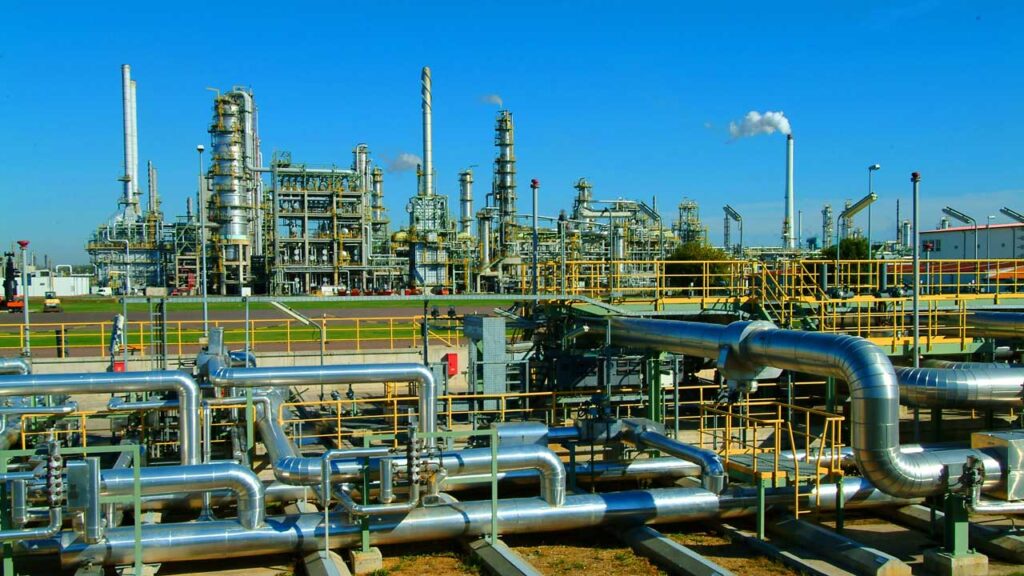
Currently, refiners locally are producing substantial volumes of AGO (diesel), ATK (aviation fuel), and PMS (petrol). There are also other intermediate products being produced. The Group Managing Director of RainOil Ltd, Gabriel Ogbeche, said marketers were free to source products anywhere, but noted that local refiners were being patronised.
All major marketers have been patronizing local refineries, and they will continue to collaborate for the best interest of the industry. The Group Chief Commercial Officer of Dangote Group, Rabiu Umar, said that this meeting was just one of many to come that will move the industry in the right direction.
There have been concerns lately that oil marketers were boycotting the Dangote refinery by importing diesel into Nigeria, despite its massive production locally by the $20bn refinery located in Lagos.