The ongoing scarcity of crude oil, which can currently fetch up to $119 per barrel, is the reason for this price increase.
The continuous battle between the United States and its partner Israel, which has been conducting a military operation against Iran, has resulted in a global energy crisis that has impacted Nigeria. Nearly 30% of the world’s oil is consumed in the oil-rich Middle East, where the conflict has interrupted supply and production.
Nigerians have witnessed a consistent rise in PMS prices over the past month as the Dangote refinery raised fuel prices per liter from ₦774 to ₦874, then to ₦1,075 and ₦1,175 to mirror the pricing of crude oil globally. After a first decrease to ₦1,075 and a subsequent increase to ₦1,175 just a week later, the most recent hike is the highest price since the conflict started.
The pump price would climb in tandem with Dangote Refinery’s recent hike in the gantry price to ₦1,245, potentially reaching nearly ₦1,500 per litre.
In the upcoming weeks, the ongoing turmoil in the Middle East brought on by the fighting is probably going to make crude oil prices much worse. Arab nations gathered in Riyadh, Saudi Arabia, on March 19 to urge that Iran stop all attacks in the region, but their desire has not yet been fulfilled because a day later, Iran struck Kuwait’s largest oil refinery.
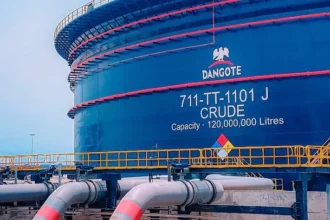
Dangote Refinery has so far shown that it is willing to modify its product’s price to reflect the price of crude oil. The largest refinery in Africa and among the biggest worldwide, it can generate up to 600,000 barrels per day. The Nigerian Midstream and Downstream Petroleum Regulatory Authority (NMDPRA) has not granted any new oil importation licenses since 2025, in part because the refinery now supplies Nigeria’s daily needs.
Dangote Refinery attributed the prior price rise to the growing cost of acquiring crude oil globally in the news statement. Dangote Refinery acquires the majority of its crude oil overseas due to the Nigerian National Petroleum Corporation Limited’s inability to supply the refinery’s demand, and the worldwide scarcity has raised the cost of production.