
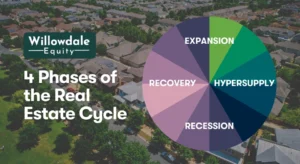
Recovery is characterized by the market emerging from a downturn, with property values stabilizing but vacancies remaining high. Investors should focus on value-add opportunities and play the long game. Expansion involves economic growth returns, job creation fueling demand for space, rising rents, and new development projects. Hyper supply occurs when developers overbuild in response to strong demand, resulting in rising vacancies and slowing rent growth.
Recession is characterized by an economic slowdown and oversupply hitting simultaneously, leading to increased vacancies, declining rents and values, and distressed sales becoming more common. Investors should preserve cash, buy distressed or foreclosed assets at deep discounts, and focus on quality locations and creditworthy tenants.
To recognize a shift in the cycle, investors should monitor indicators such as vacancy rates, rent growth, construction activity, cap rates, job and GDP growth, and interest rates. Real estate cycles vary by location and property type, so it is crucial to consider local economic drivers, population trends, and zoning policies.
Understanding real estate cycles allows for more informed, strategic decisions, allowing investors to position themselves for long-term success. Whether a first-time investor or managing a commercial real estate portfolio, keeping the cycle in mind will help riders ride the highs and survive the lows with confidence.