
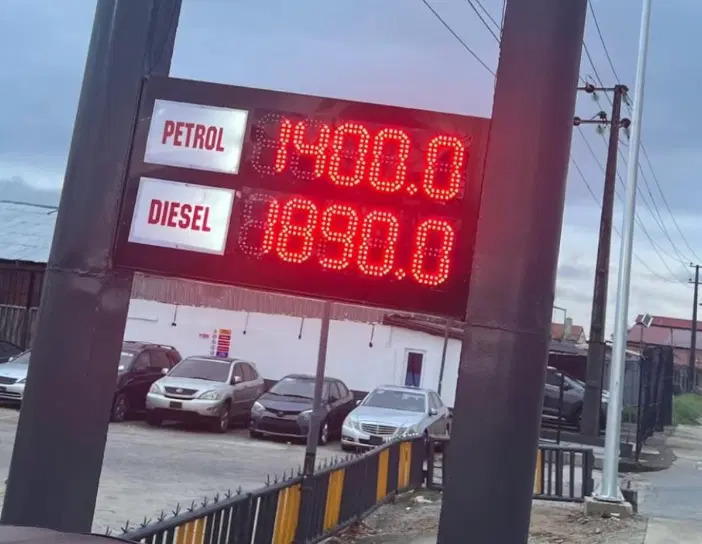
- Independent marketers boost prices to N1,400 per litre, while NNPC stations shift to N1,375 per litre.
In Lagos and the surrounding areas, MRS filling stations have raised the price of gasoline to N1,400 per litre from N1,300. This represents an increase of N100, or 7.7%.
In a same vein, some independent marketers have hiked their rates to N1,400 from roughly N1,360 per litre, while filling stations run by NNPC Limited have raised their pump costs to N1,375 per litre from N1,275.
The most recent hikes came after Dangote Petroleum Refinery raised the gantry price of gasoline to N1,350 a litre, reflecting the effects of rising crude oil prices and growing expenses throughout the petroleum supply chain. In addition to raising operating costs for companies that rely on fuel for logistics, electricity production, and other operations, the development is anticipated to increase household prices and transportation costs.
For transporters, the rise in costs leads to higher operating expenses, prompting potential fare increases for buses, taxis, and other petrol-powered vehicles. This will further burden commuters, including workers, students, and traders, who already allocate a significant portion of their income to transportation. The increased transportation costs may ripple through the economy, raising prices for food, raw materials, and finished products as distributors pass on logistics expenses to consumers.
Households using petrol-powered generators will face higher electricity costs, and small to medium-sized enterprises might see squeezed profit margins due to rising fuel, transportation, and power costs. This situation may contribute to inflationary pressures, as higher energy costs affect overall prices. The increase is primarily driven by rising international crude oil prices, which impact domestic fuel supply economics due to Nigeria’s deregulated market.
Manufacturers and businesses in Nigeria may need to rethink operating costs and possibly raise prices due to rising international crude oil prices, which have increased the cost of refined petroleum products. Mazi Colman Obasi from OGSPAN highlighted that this sharp rise could further inflate domestic petrol prices, affecting transportation and household expenses. Victoria Ibezim-Ohaeri noted that higher fuel and logistics costs may diminish purchasing power, especially for low- and middle-income households, amid Nigeria’s current inflation rates of 15.43% overall and 20.31% for food. Continued increases in crude prices could exacerbate these economic pressures.
Businesses in sectors such as manufacturing, agriculture, construction, retail, and logistics are facing increased costs for energy, transportation, and inputs. If these costs persist, businesses may either pass them on to consumers, accept lower profit margins, delay investments, or decrease their workforce.
A sustained oil-price shock has the potential to hinder the growth of the non-oil economy, despite potential gains in the oil sector due to rising crude prices. In the near future, volatility is expected to be a significant concern, as ongoing conflicts and disruptions in major shipping routes might keep crude and refined petroleum prices high. Recent disruptions have already affected oil transport through the Strait of Hormuz, leading to increased shipping and fuel expenses.