
- Financial discipline for high income earners
There is a painful irony in modern finance that many Nigerians never stop to think about. Some of the smartest investors in the world spend sleepless nights studying markets, reading balance sheets, analyzing charts, and chasing tiny improvements in investment performance. They grind for 80 hours a week trying to improve returns by a fraction of a percentage point. Yet, hidden quietly inside their personal lives are lifestyle habits draining far more money than any investment strategy could ever recover.
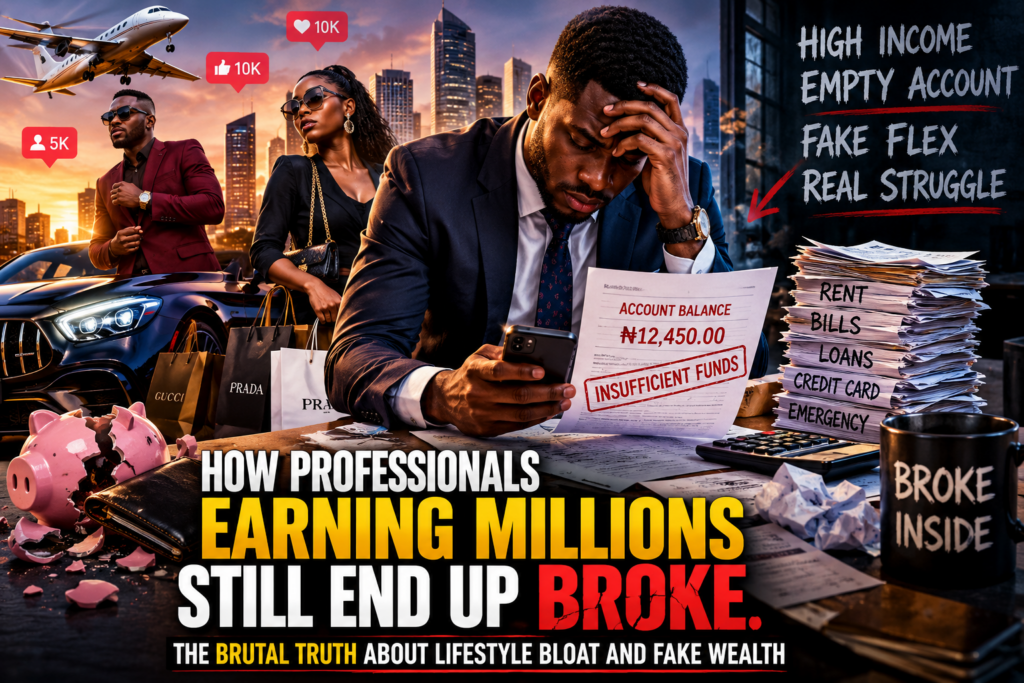
This is the brutal truth many people do not want to hear: the biggest threat to wealth is often not poor investment performance. It is lifestyle bloat. And nowhere is this more visible than among rising professionals and middle-class Nigerians. A person earns more money, and instead of increasing their financial strength, they increase their expenses. The salary rises, and suddenly the appetite rises with it. The phone changes. The car changes. The rent changes. The restaurants become more expensive. Weekends become more extravagant. Fashion becomes a competition. Vacations become a performance. Before long, the person who once struggled financially but dreamed of “making it” is now earning significantly more but somehow still living under pressure.
The tragedy is that many people never realize they are trapped because their suffering is now decorated with comfort. The dangerous thing about lifestyle inflation is that it disguises itself as progress. People mistake consumption for success. They confuse looking wealthy with becoming wealthy. Yet, real wealth is not what you show people, it is what you keep, what you multiply, and what continues to work for you long after applause has disappeared. Beyond a certain income level, people generally fall into three groups.
The first group are those who save consistently. These people understand that income alone does not create wealth, discipline does. They recognize that every naira not wasted is capital that can be invested, compounded, and transformed into future freedom. They may not always look flashy, but over time they quietly build financial strength that others underestimate.
The second group are those who believe they cannot save, these are people who genuinely feel overwhelmed by the cost of living. Nigeria’s economic realities are harsh, and for many families the pressure is real. Inflation, school fees, rent, transportation, electricity, and unexpected obligations consume income rapidly. But even within this struggle, there is often hidden leakage, small habits repeated consistently over years that quietly destroy wealth. Daily impulse spending, emotional buying, unnecessary subscriptions, excessive social outings, and unplanned financial commitments slowly eat away at future opportunity.
Then there is the third group, the most dangerous category of all. These are people who believe they do not need to save. They earn well, they feel secure, they assume the money will always come. Because income is flowing today, they underestimate the uncertainty of tomorrow. This group often lives the loudest and crashes the hardest. Many high-income Nigerians are one emergency away from financial instability despite appearing successful on the surface. A job loss, health crisis, business downturn, or economic shock suddenly exposes how fragile their financial structure really is.
Saving money is not punishment. It is not suffering. It is not a sign that life should not be enjoyed. Saving is strategic self-respect. It is the ability to delay unnecessary gratification today in order to create options tomorrow. The most financially dangerous sentence in personal finance is: “I deserve it.” Of course you deserve enjoyment. Of course you deserve comfort. But the question is, whether every upgrade is actually improving your life or merely feeding your ego.
Many Nigerians are financing appearances they cannot sustain because they are trapped in silent social competition. People buy cars to impress people who are themselves drowning in debt. They rent apartments they cannot comfortably afford because they fear looking “small.” They spend excessively at weddings, clubs, birthdays, and social events because image has become currency. Meanwhile, the investor quietly saving and compounding money is building something far more powerful: financial independence.
Money has a strange behavior. It rewards stability and punishes emotional behavior. The more emotionally attached people become to appearances, the harder it becomes to build lasting wealth. Financial freedom is rarely dramatic in the beginning. It is often boring, disciplined, repetitive, and invisible. But over time, the effects become extraordinary. A person saving ₦100,000 monthly and investing wisely over years may look ordinary today. But compounding quietly transforms ordinary consistency into extraordinary outcomes. The problem is that most people underestimate how powerful small disciplined actions become when repeated over long periods. This is why lifestyle control is one of the highest-return investments any Nigerian can make. Cutting unnecessary financial leakage often creates more wealth than obsessing over tiny improvements in investment returns. A person may spend months trying to gain 10% investment growth while losing 20% yearly through uncontrolled spending habits. The issue is not whether you earn enough. The issue is whether your lifestyle expands faster than your income.
The Nigerian economy will continue to test people financially. Inflation will rise. Social pressure will intensify. New temptations will emerge daily through social media and consumer culture. But those who learn to master lifestyle discipline gain a massive advantage over everyone else. They create breathing room. They build investment capital. They reduce stress. They gain the ability to make decisions from strength rather than desperation. At the end of the day, wealth is not built only by earning more. It is built by keeping more of what you earn and directing it toward assets that grow over time. The world celebrates visible consumption, but real power often hides in invisible discipline. And the people who understand this early discover something extraordinary: financial peace is not found in endlessly upgrading your lifestyle. It is found in controlling it before it controls you.