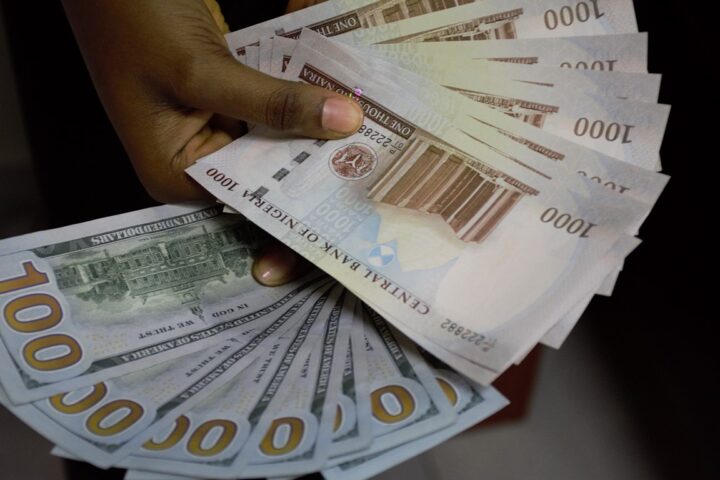
The naira delivered a split performance on Wednesday, dipping slightly at the official market while gaining ground in the parallel market; a reminder of the currency’s delicate balancing act.
Data from the Central Bank of Nigeria show the naira closed at N1,338.11 per dollar, compared with N1,335.96 the previous day. The N2.15 drop marks a mild depreciation at the official window.
But the mood was different on the streets.
In the parallel market, the naira strengthened by N20, closing at N1,470 per dollar, up from N1,490 on Tuesday. Traders say the improvement was largely driven by reduced demand for dollars.
“There’s less pressure from buyers this week,” said Abubakar Bagazzi, a Bureau De Change operator in Abuja’s Wuse Zone 4. “When demand drops, the rate adjusts quickly.”
The contrasting movements reflect the persistent gap between Nigeria’s official and informal currency markets, where liquidity and demand often move at different speeds.
There was also modest relief on the reserves front. The Central Bank’s latest figures show Nigeria’s external reserves climbed to $48.50 billion on February 17, from $48.37 billion a day earlier. While the increase is incremental, sustained reserve growth could help support the currency if external pressures mount.
Analysts say the naira’s direction in the coming weeks will depend on the strength of foreign inflows, import-related dollar demand, and signals from monetary authorities.
For now, Wednesday’s trading paints a familiar picture: modest movement at the official window, sharper swings in the parallel market and a currency still highly sensitive to shifts in demand and liquidity.