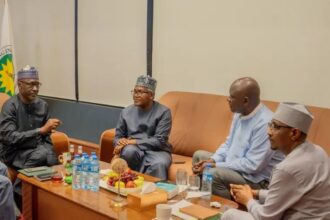
During a media briefing on Thursday in Abuja to commemorate Ola Olukoyede’s second anniversary in office, Abdulkarim Chukkol, the EFCC’s Head of Investigation, revealed this information on behalf of Ola Olukoyede, the agency’s chairman.
Thousands of investors were enticed by CBEX, an online trading and investment platform, with claims of substantial returns from cryptocurrency transactions, including referral bonuses and guaranteed earnings.
But when the portal suddenly went offline in April 2025, investors were unable to retrieve their money, which caused a great deal of indignation. After that, the EFCC started looking into how it operated.
Chukkol described the case as one of the most complex financial investigations the anti-graft agency had ever conducted, including numerous levels of transactions and actors from other nations.
“The investigation is rather complicated, as you are aware. I mean that it involves multiple jurisdictions when I say that it is complex. As everyone is aware, the method of operation involves virtual currency,” he stated.
He said that the majority of the custodians of the revenues were based outside of Nigeria and that money received from Nigerians via the CBEX platform was laundered through a number of other channels.
He added that individuals from other nations were also being investigated and that the total sum involved exceeded millions of dollars.
After being acquired from Nigerians, the funds underwent several stages of money laundering. We are tracking down the custodians of the funds, who are located outside of Nigeria. On the other hand, we are collaborating with law enforcement worldwide. The money has been blocked in part. However, when monies are frozen, there are procedures to follow before repatriation; you don’t just ask for them and get them right away.
Speaking about the sum, I would estimate that it is in the millions. Suspects from other nations are also being looked into; Nigerians are not the only ones involved. Therefore, in addition to the EFCC, our colleagues in other jurisdictions are also working on this issue,” he continued.
Chukkol revealed that key Nigerian participants in the scam had been taken into custody and were awaiting trial in relation to domestic prosecution.
The main actors in Nigeria have been taken into custody and are facing charges. Three people—two jointly and one separately—have been charged with crimes.
Before we can claim any of the frozen funds, this procedure is also required. First, we have to prove that there was criminal activity here and that funds were transferred from Nigeria to other nations,” he said.
Speaking further, the Director of Proceeds of Crime at the EFCC, Gbolahan Latona, addressed current misconceptions over the agency’s handling of seized assets and statutory deductions.
According to a Daily Trust source, the Senate had on Tuesday resolved to probe alleged unauthorized two per cent deductions by the EFCC from seized assets.
Reacting, Latona disputed the claim, insisting that the EFCC had not participated in any illicit deductions.
In contrast to the allegations, the EFCC has not been making any statutory deductions. The right people are aware of what needs to be done and where to look for permission.
“Funds are transferred to the confiscated and forfeiture account after confiscations are completed. He declared, “The EFCC does not participate in illegal or unlawful appropriation.”
Regarding the duplexes connected to Godwin Emefiele, a former governor of the Central Bank of Nigeria, Latona affirmed that the EFCC had cooperated with the Federal Government’s order by transferring the properties to the Ministry of Housing.
Officials from the Housing Ministry and the EFCC formed a joint committee. Currently, between 40 and 50 percent of the structures are finished.
“We have been to the locations, and assessments have been completed. In accordance with the government’s directive, work is still being done. As instructed by the President, the houses will be put up for public sale after they are finished,” he continued.