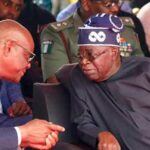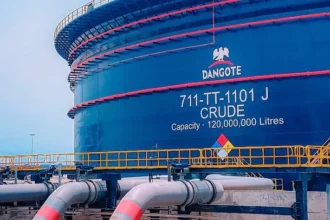
The Implementation Committee on crude oil sales in Nigeria, led by Finance and Economy Minister Wale Edun, is set to hold meetings to finalize a framework for Dangote refinery crude prices. The Federal Government will decide whether to pay subsidies or allow Nigerians to buy the product at market price. Oil marketers predict higher Dangote petrol costs.
Petrol in Nigeria is sold at N600-N700/litre, with the Major Energies Marketers Association of Nigeria revealing a landing cost of N1,117/litre for PMS. The Nigerian National Petroleum Company Limited is the sole importer, with other marketers unable to access the US dollar.
NNPC, Nigeria’s oil firm, has admitted to a heavy subsidy burden on petrol imports. Under an agreement with the government, the company has made petroleum products (PMS) available for retail distribution at half of the landing cost. The company has not paid any money to any marketer in the last eight to nine years. The government directs NNPCL to sell imported petrol at a half-price, and the company could potentially net off for the money.
The Nigerian government is imposing a subsidy on the import of petroleum products (PMS) from the Dangote refinery, causing a shortfall in the landed price. The government’s committee has agreed to roll out petrol in September 2024, with crude oil sales to Dangote and other refineries starting on October 1. The cost of petrol from the $20bn plant will be discussed by the government and plant management in the coming weeks. The options include paying subsidies without burdening NNPC or allowing Nigerians to buy the product at the market price.
The official suggests Nigerians pay the real petrol cost or the government bring back subsidies. Major discussions focus on crude supply in naira, which should be finalized in a few weeks. The sale of crude to Dangote in naira has been settled, but the framework is still being worked on. The committee will benchmark the exchange rate for crude sale to Dangote, despite the lack of the United States dollar.
The Major Energies Marketers Association of Nigeria is considering a price for Dangote petrol ahead of its release next month. The association is willing to load from the plant, but the price will be tough due to logistics and cost-taking. The methodology for picking Dangote from the plant has already been worked out and is in place.
The Nigerian government is trying to intervene in the oil sector, but the subsidy is not a good policy. The government has introduced the Compressed Natural Gas initiative to tackle the cost of subsidy on PMS. President Bola Tinubu is pushing for CNG to stop paying subsidies for PMS, which is slowing uptake. However, the government’s current policy is that there is no subsidy provided for in the budget. The price of Dangote is not yet determined, and the government may intervene. Refined crude will still be at the international market price, as it should be. The situation is expected to be resolved once the government’s time in power ends.
Marketers are not prepared to buy petrol at Dangote’s international market price, as they cannot buy it at higher than their pump prices. There is no official pricing template for petrol, as the prices of diesel and aviation fuel are the market price. The Independent Petroleum Marketers Association of Nigeria (IPMA) National Operations Controller, Mustapha Zarma, stated that marketers cannot buy Dangote petrol without government intervention, as they cannot buy their product at the current retail price. The committee on crude sale in Nigeria is reviewing progress on key initiatives to ensure smooth implementation.
Nigeria’s Finance Minister Wale Edun led a meeting on the transition to crude oil sales in Nigeria, reviewing progress on key initiatives. The meeting reviewed the commencement of naira payments for crude oil sales to the Dangote Refinery starting October 1, 2024. The first PMS delivery from Dangote is expected next month under existing agreements. The initiative aligns with a presidential directive aiming to enhance Nigeria’s refining capacity and promote economic growth.