NNPCL asserted that the government permits it to sell at a price lower than the landing cost, despite the fact that it has denied providing fuel subsidies to marketers for the previous nine months.
Alhaji Umar Ajiya, the company’s chief financial officer, provided the explanations on Monday in Abuja.
According to Ajiya, the business only deals with the gaps in gasoline importation between the federation and itself.
According to him, credit lines are common in downstream companies because of the global trade system.
He continued by saying that the business had previously had term-line contracts for payment under an open credit arrangement with PMS suppliers.
Additionally, Dapo Segun, NNPCL’s Executive Vice President of Downstream, stated that the establishment of an open credit agreement with suppliers was indicative of the national oil company’s long-standing credibility.
Regarding the amount still owed to suppliers, it is less than the $6.8 billion that has been disclosed.
“Our relationship with our suppliers is what counts most in order to guarantee that we continue to pay our suppliers as we have in the past.
“I wouldn’t want to quote any figures, and you would understand that it’s not a static figure. It decreases when we pay, and it increases when they provide goods. While it’s a dynamic approach, the most crucial thing is to make sure PMS is still accessible throughout the nation, he stated.
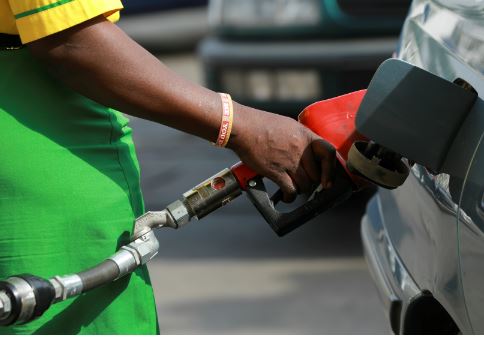
Even when major marketers place the landing cost of gasoline above N1,000 per litre, the Federal Government has consistently resisted providing subsidies for the fuel.
The Federal Government pays the NNPCL to sell fuel to Nigerians at a subsidized rate because it is the only importer of gasoline.
However, as experts work to stop fuel importation, this has resulted in persistent fuel shortages around the country.