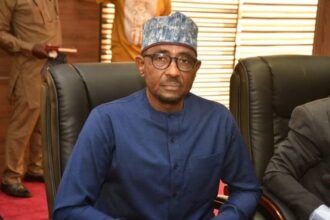
Segun Kuti-George, National Vice President of the Nigerian Association of Small-Scale Industrialists, stated that Nigerian company owners who nearly lost their companies still live in fear of fire stemming from the EndSARS protest.
Kuti-George related the collective experiences of company owners in the EndSARS demonstration to NAIJA STREET MATTERS, saying, “Our factories were nearly torched and we would have been without businesses.”
The protests, which are also known as the Hunger Protest, are planned on August 1, 2024. The majority of the organizing appears to take place on social media sites, particularly X, which was formerly known as Twitter.
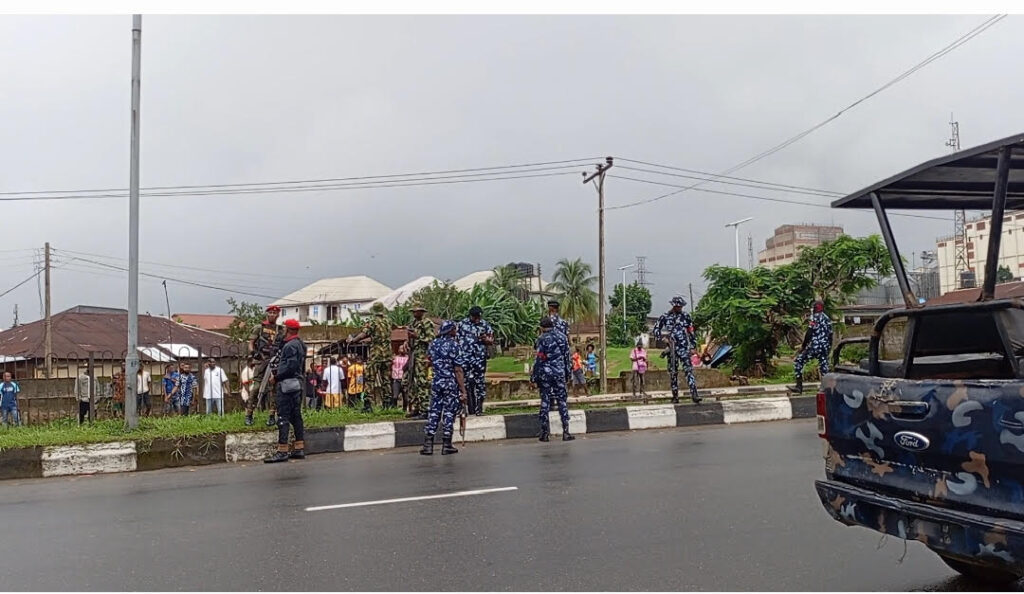
Business stakeholders have expressed their wish for nonviolent protests, in addition to the Nigerian political class, which has catered to the emotions of demonstrators urging calm and security services, which have issued a warning against violence.
The Vice President of NASSI stated that more Nigerians would limit their travel on the day of the scheduled demonstrations, which would result in less foot traffic and a slower business day.
People should use caution. Given that some businesses might request that their employees work from home on that particular day, Kuti-George said, “They will be reluctant to come out.”
Additionally, when workers are forced to stop working due to protests, output and income are lost, as noted by development economist Rotimi Oyelere.
Large-scale nationwide protests, according to Oyelere, can have a multiplier effect on daily wage earners. “There will be a macro impact that will reduce general output and on a national level, followed by a micro impact that will result in direct revenue loss for households and enterprises. He continued, “It can spiral out of hand and result in indirect loss if any damaged property needs to be restored. Noting that a decline in trust contributed to the escalating social unrest in the nation, the economist advocated for increased openness between the public and the government. The planned statewide protests present “grave dangers for an economy that is already in a very fragile state,” according to a previous analysis by the Centre for the Promotion of Private Enterprise.
The CPPE asserted in a statement that if the protests are not handled appropriately, they may have an impact on earnings and result in a daily loss estimated at N400 billion. Over 90% of Nigerians who are employed work in the informal sector, according to Dr. Muda Yusuf, the CEO of CPPE, who made this suggestion to the demonstrators. The informal sector employs people who rely on their daily wages, thus any disruption to their means of subsistence that lasts longer than a day has the potential to cause significant social upheaval. This highlights how open the nation is to protracted protests.
Among other things, he suggested that the protests might only last one day since, according to Yusuf, “experience has shown that the chances of protests degenerating into chaos and anarchy increase with the duration of the protests.”