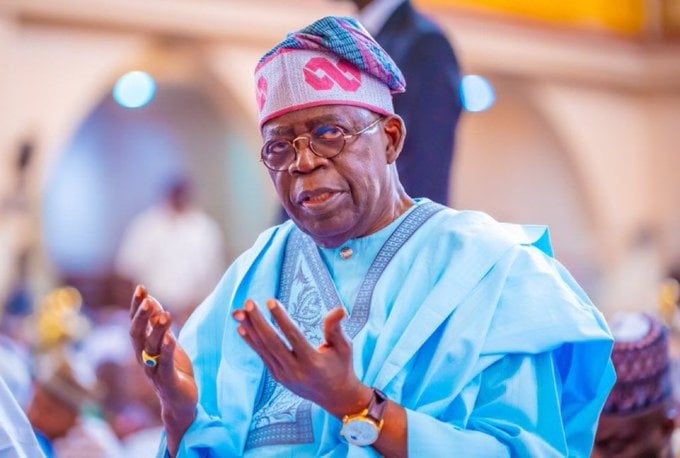
State governments are backing President Bola Tinubu’s new directive on oil revenue remittances but they insist it is not about getting a bigger slice of the pie. Instead, they say it’s about following the Constitution.
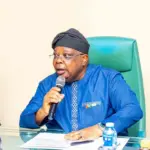
Speaking on Arise News, Akintunde Oyebode, chairman of the Forum of State Commissioners of Finance, described the projected financial gain from Executive Order 9 as relatively modest.
“In monetary terms, this is not even a significant increase to the Federation Account,” he said, estimating that management fees, frontier exploration charges and gas flaring penalties could add about ₦1.5 trillion.
Against annual Federation Account inflows he put at more than ₦30 trillion, that represents only single-digit growth. “But that’s not the point,” Oyebode stressed.
Signed in February 2026, Executive Order 9 requires that oil and gas revenues due to the Federation be paid directly into the Federation Account, limiting deductions and ensuring statutory inflows are remitted in full before spending.
The directive has sparked concern in parts of the oil and gas industry. The Petroleum and Natural Gas Senior Staff Association of Nigeria has warned it could disrupt operations and dampen investor confidence.
Oyebode, who also serves as Ekiti State’s finance commissioner, rejected claims that the order is a revenue grab by states.
“It’s not about states getting more money,” he said. “It’s about adherence to the Constitution.”
He argued that a deeper issue lies in the impact of the Petroleum Industry Act, particularly on joint venture inflows.
“Pre-PIA, JVs contributed about $12 billion to the Federation. Post-PIA, that number has dropped to around $2 billion,” he said, suggesting asset transfers and governance changes deserve closer scrutiny.
On concerns that the order could weaken NNPC Limited, Oyebode dismissed fears of destabilization. He cited the company’s reported ₦4.5 trillion profit in 2024 and estimated revenues of roughly ₦45 trillion, arguing that the sums under discussion are relatively small in comparison.
The Presidency has framed the executive order as a constitutional enforcement measure, not an expansion of executive power. Oyebode said any legal disputes should be resolved in court and urged observers to wait for implementation guidelines before drawing conclusions.
“If there are valid agreements and contracts in place, it will not affect repayment,” he said.
Beyond the immediate controversy, the conversation also turned to state finances. Oyebode pushed back against claims that states depend excessively on federal transfers or borrow to cover salaries.
“Revenues in the Federation Account belong to the federation,” he said, rejecting the idea that states are simply handed money by Abuja.
He added that several states have reduced domestic debt by between 15% and 20% in recent years, noting that rising foreign debt figures often reflect exchange-rate shifts rather than fresh borrowing. Multilateral loans, he said, are typically tied to infrastructure and development projects, not recurrent spending.
While the financial boost from EO9 may be limited, its implications could be far-reaching. At its core, the debate touches on fiscal federalism, constitutional interpretation and control over Nigeria’s most vital revenue stream: oil.