
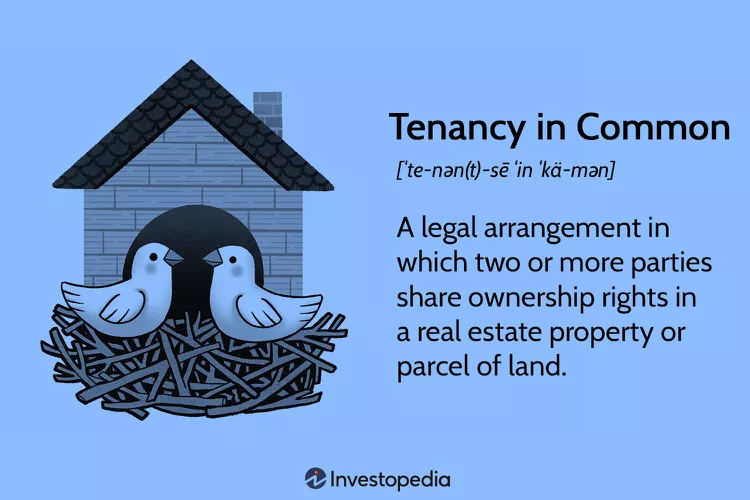
A legal arrangement known as a tenancy in common (TIC) allows two or more parties to share ownership rights over real estate. However, it has what could be a serious disadvantage: A TIC has no survivorship rights. Over the course of their lives, each independent owner may hold an equal or different share of the entire property.
How Tenancy in Common (TIC) Works
Although each tenant may possess a different percentage or proportionate financial share, owners, as tenants in common, enjoy interests and privileges in all aspects of the property.
It is possible to create tenancy under common agreements at any point. After the other members have already signed a TIC agreement, a new person may become an interest in a property. Additionally, each renter is free to borrow money or sell on their own behalf using the equity they hold.
A tenant in common may hold a different amount of the property, but they are not entitled to ownership of any particular area of it.
Because this type of ownership does not contain rights of survivorship, a deceased tenant’s or co-owner’s part of the property belongs to their estate upon their death rather than to the other tenants or owners. However, the tenant may designate their co-owners as beneficiaries of their estate with regard to the property.
Tenancy in Common Dissolution
In a legal proceeding, a partition action may be initiated by one or more tenants to dissolve a tenancy in common. This action can be voluntary or court-ordered, dividing the property into individual parts owned and managed by each party. If an understanding cannot be reached, the court may divide the property as a partition in kind, separating the tenants’ shares of the property. In cases where a joint agreement cannot be reached, the holding is sold, and proceeds are divided among the tenants according to their respective shares.
Property Taxes for Common Tenancy
Tenants in common agreements typically receive a single property tax bill, but in some jurisdictions, joint-and-several liability applies to all independent owners, regardless of their ownership percentage. Tenants can deduct payments from their income tax filings, if the taxing jurisdiction follows joint-and-several liability. In counties that don’t follow this procedure, they can deduct a percentage of the total tax up to their level of ownership. This allows them to deduct the amount they contributed to the property tax.