
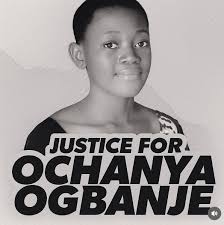
Ochanya Ogbanje was a 13-year-old girl from Benue State, Nigeria, who died on 17 October 2018 following complications from extended sexual abuse.
She had been living with relatives so she could attend Junior Secondary School, but during that period she was allegedly subjected to serial rape by her maternal-relation uncle, Andrew Ogbuja a senior lecturer at Benue State Polytechnic, Ugbokolo and his son, Victor Ogbuja.
Medical evidence reportedly showed she developed a vesicovaginal fistula (VVF) a debilitating condition potentially arising from prolonged sexual assault and later died in the hospital. On 10 October 2019, the Benue State Government arraigned Andrew Ogbuja on four counts of rape, leading to death. He pleaded not guilty.
On 28 April 2022, a Benue State High Court acquitted Andrew Ogbuja, ruling prosecution failed to prove its case. On the same day in a separate case, the lecturer’s wife/guardian, Felicia Ochiga‑Ogbuja, was convicted of negligence (failure to protect the child) and sentenced to 5 months imprisonment without option of fine. In November 2022 the Court of Appeal upheld Mrs Ogbuja’s conviction. On the 7th anniversary of Ochanya’s death (October 2025), civil society groups and social media users reignited demands for the arrest of Victor and full accountability in the case.
Issues & Concerns Raised
1. Child protection failure: Ochanya was living with relatives under supposed guardianship, yet allegedly abused for years. The case highlighted systemic vulnerability of children placed away from immediate family.
2. Justice & accountability gap: Though one suspect was acquitted and another remains at large, the case raised concerns of impunity and inadequate prosecution of sexual violence against minors.
3. Technical vs substantive justice: Many observers described the acquittal of the lecturer as a victory of procedural/technical defence over moral/substantive justice.
4. Negligence as criminal offence: The conviction of the guardian-mother for failure to protect formed a precedent for prosecution of omissions, not just direct acts.
5. Insufficient enforcement: The missing suspect (Victor) remains a major concern. Calls continue for law-enforcement to locate and prosecute him.
6. Public outrage & social mobilization: The case sparked protests, advocacy on child rights, and online campaigns (#JusticeForOchanya).
Why It Matters
Symbolic significance: The case came to symbolize the broader issue of sexual abuse of minors in Nigeria, especially within so-called safe spaces (homes, guardianship).
Legal implications: It tested the capacity of Nigerian courts to prosecute sexual violence, the standards of proof required, and the treatment of negligence/omission in child protection.
Policy implications: It underlined the need for stronger child-welfare mechanisms, improved guardianship oversight, better policing of abuse, and public education.
Societal impact: The public outcry triggered by the case shows there is sensitivity and demand for justice, but also frustration at delays, loopholes, and inconsistent outcomes.
Outstanding Questions & What’s Next
Where is Victor Ogbuja? The son remains at large. His arrest is critical to completing justice in this case.
Will Andrew Ogbuja ever be retried? The lecturer’s acquittal hinged on “failure to prove” rather than finding him factually innocent. Some advocates call for re-examination of evidence or reopening.
Will the case lead to systemic reform? Beyond this individual tragedy, will Nigeria strengthen child-protection systems to prevent recurrence?
Will the family get closure? For Ochanya’s relatives and for society, closure is tied to seeing accountability, not just verdicts.
What about support for victims of abuse? The case shows the need not only for legal recourse but for medical, psychological, and social support for victims and survivors.
Final Reflection
The story of Ochanya Ogbanje is deeply tragic. A young girl, full of promise, died of complications arising from abuse. It challenges us: are our guardians, systems and laws doing enough to protect the most vulnerable? The fact that seven years on, the case still stirs frustration and calls for action means it remains a litmus test for justice, for child welfare, for society’s willingness to safeguard its children.