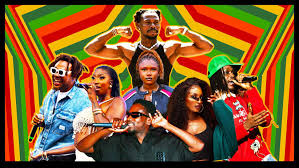
Not too long ago, Afrobeats was a sound you caught at a Lagos wedding, a birthday bash in Mushin, or blasting from okadas during traffic jams on Third Mainland Bridge.
Now it’s on Super Bowl halftime playlists, Grammys, Coachella stages and more. It’s Shallipopi’s “Laho” playing in malls in Brazil and Burna’s voice floating over a Travis Scott verse in ‘Ta Ta Ta’. In addition, okadas have been banned (mostly)
But while the world is dancing, we need to pause and ask: Who’s really cashing out from all this? Who owns the rights, masters, profits, who owns the story? This isn’t just about vibes. This is about economics, power, and cultural control.
Let’s unpack it through three angles:
1.The Global Money Machine
2.The Royalty Wars
3.The Unbalanced System
1. Afrobeats Is Big Business, But Who’s Banking the Billions?
First, the facts: As of 2025, a report by PwC Nigeria estimates that Afrobeats generates $1.1 billion a year globally. That’s more than Nollywood. More than Nigeria’s book industry. Half of that (roughly $500 million) is tied directly to Nigeria. But ask any artist, and they’ll tell you: Most of that money doesn’t end up in Nigerian hands.
Between 2017 and 2023, Spotify saw a jaw-dropping 284% increase in streams of Nigerian music. By 2024:
Burna Boy: 5.6 billion streams
Wizkid: 4.2 billion
Rema: 3.9 billion
Tems: 2.7 billion.
But here’s the kicker: over 65% of royalties are routed through Western-owned platforms, according to MIDiA Research (2024). We provide the culture while others take the cash.
Burna Boy’s “Love, Damini” peaked at No. 2 in the UK and went Platinum in France. Wizkid’s “Essence” made history on the Billboard Hot 100 and is now 2× Platinum in the U.S. Rema’s “Calm Down” remix garnered over 1.2 billion YouTube views.
Meanwhile, Burna Boy sold out Madison Square Garden in 2022 (20,000 people). Wizkid packed out London’s O2 Arena not once, not twice, but three times in a row. Still, for all this success, Nigerian labels, producers, and even the artists themselves often see just a fraction of the profits. We’re exporting diamonds and buying back dust.
2. The Royalty Wars: Artists vs. The Fine Print
Behind every hit track is often a bitter backstory.
Wizkid’s Breakaway (2009–2014): At just 19, Wizkid signed with EME in 2009. The deal gave him fame, but not full creative or financial control. By 2014, he’d had enough. He walked away and founded Starboy Entertainment. These days, he partners with Sony/RCA, keeping a firmer grip on his music. He was lucky but many aren’t.
YCee’s Tinny Explosion (2015–2019): YCee blew up with “Jagaban” and “Juice.” But in 2019, he publicly accused Tinny Entertainment of financial exploitation: “One of my biggest regrets was not leaving earlier.” He eventually founded ANBT (Ain’t Nobody Badder Than) and went independent.
Brymo’s Legal Lock (2010–2016) : Brymo signed with Chocolate City in 2010. But in 2013, he wanted out, citing exploitative terms. The label sued and he was blacklisted. It took years and court battles for him to fully regain control of his music.
Omah Lay’s Regret (2022): In a raw 2022 interview, Omah Lay admitted: “Most of us didn’t understand what we were signing… I’m still paying for that.” Signed to KeyQaad, he later had to partner with Sire Records (under Warner) for global visibility.
Ayra Starr’s Global Rise…with strings? : Ayra was just 18 when she signed to Mavin Records in 2020. In 2019, Mavin Records received investment from Kupanda Holdings and by 2023, Mavin had partnered with Universal Music Group while Kupanda Holdings retained minority status, so even though her 2024 single “Rythm and Blues” hit UK top 10, it’s unclear who really owns what… especially when it comes to publishing splits. In mid-2025, Ayra Starr also signed to Roc Nation for international management, in addition to her Mavin/UMG. Fame is expensive but independence is even pricier.
3. Who Controls the Culture? Spoiler: Not Nigeria
Afrobeats is now global. But the power centers aren’t in Lagos or Accra, they’re in Los Angeles, London, and Silicon Valley. Spotify, Apple Music, YouTube: not African-owned yet they control what’s playlisted and what fades away.
TikTok, where songs like Ruger’s “Asiwaju” or Odumodublvck’s “Declan Rice” went viral? Owned by China’s ByteDance. Even when Billboard launched a U.S. Afrobeats Chart in 2023, it was celebrated, but the data, monetization, and insights are all in foreign hands.
In 2022, Burna Boy won for Best Global Album, but was never considered for Album of the Year. Wizkid’s Made in Lagos didn’t even get a nod, despite being a cultural juggernaut. We’re good enough to entertain, not to lead.
Metric Value
Global Afrobeats Market ~$1.1 billion
Nigeria’s Local Share ~$500 million
Foreign Control of Royalties ~65%
Known Independent Artists (2025) 40+
Known Contract Disputes (2010–2025) 20+
Royalties Recouped Locally Under 30%
So, What Needs to Happen Next?
1. Teach the Contracts
Every music school, law school, and youth center in Nigeria should offer free contract literacy sessions. Artists should never be shocked by what they signed.
2. Build Our Own Platforms
Boomplay is a start, but we need African-owned streaming services with transparent royalty systems.
3. Crowdfund Independence
Through Patreon, the artist first platform(EVEN), Audiomack monetization, or even blockchain-powered music platforms, fans can fund freedom.
4. Create a Pan-African Licensing Body
Like ASCAP or SACEM, a continental agency could ensure sync deals, TV placements, and film usage all benefit the original creators.
Afrobeats is Africa’s biggest cultural flex in the 21st century but without ownership, it risks becoming another exported resource, like cocoa, oil, or crude talent.
The Wizkids who fought for freedom, the YCees who exposed injustice, the Ayra Starrs carving new paths; they’re not just stars. They’re case studies. Afrobeats is a billion-dollar wave. The world is riding it and it’s time for Africa to start owning the ocean.